“Then it comes the day when you can’t be your best version…, because such version doesn’t exist.”
― Deyth Banger
When I was first diagnosed with PMOS, I thought it was one condition that looked exactly the same for everyone. The more I learned, however, the more I realized that’s not really how PMOS works. Two people can have the same diagnosis and have completely different symptoms, challenges, and experiences.
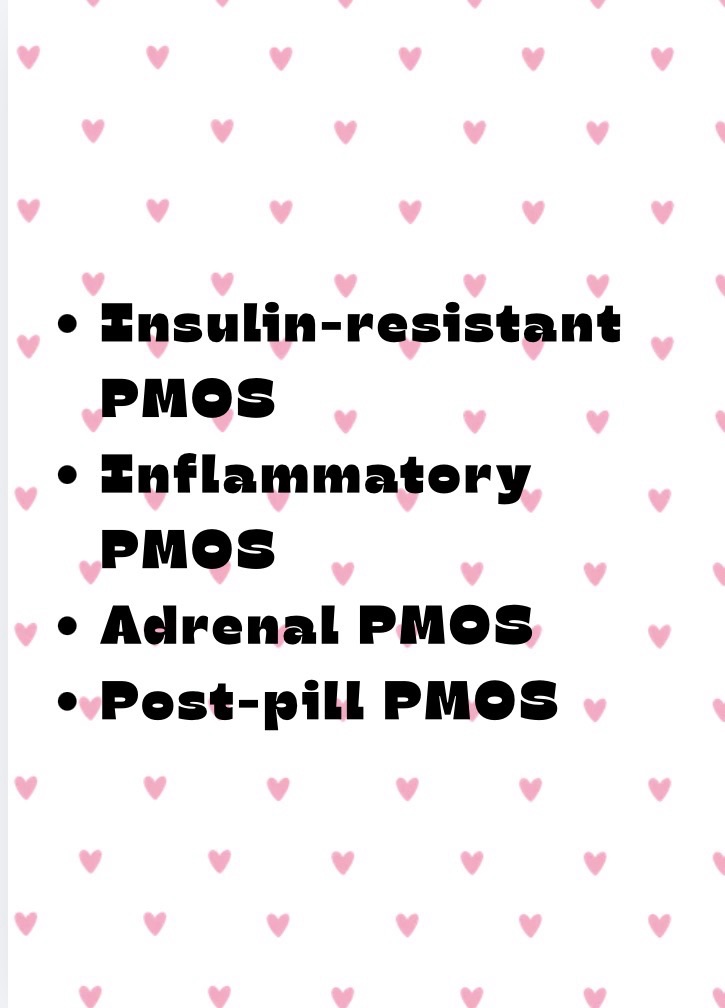
One of the concepts I kept seeing online was the idea of the four “types” of PMOS. These aren’t official medical diagnoses, and not every doctor recognizes them as distinct categories but I do. Instead, these types are used as a way to explain common symptom patterns and what may be driving them. While the labels aren’t perfect, they can be helpful for understanding why one person’s PMOS experience looks very different from someone else’s.
The most common pattern is insulin-resistant PMOS. This occurs when the body’s cells stop responding properly to insulin, causing the pancreas to produce more of it. Higher insulin levels can increase androgen production, which then contributes to many of the symptoms people associate with PMOS. Weight gain, difficulty losing weight, intense sugar cravings, fatigue, irregular periods, and acne are often connected to insulin resistance. Since insulin plays such a major role in hormone regulation, this type is frequently discussed as the foundation of many PMOS cases.
Another commonly discussed type is inflammatory PMOS. This pattern is linked to chronic, low-grade inflammation within the body. Unlike the kind of inflammation you experience after an injury, this inflammation is often less obvious but can still affect hormones and overall wellbeing. People who identify with inflammatory PMOS often report symptoms such as fatigue, headaches, skin issues, digestive concerns, and a general feeling that their body is constantly working against them. Inflammation can also worsen other PMOS symptoms, making it difficult to determine where one issue ends and another begins.
The third type is often referred to as adrenal PMOS. This form is associated with the body’s stress response system and the adrenal glands. Chronic stress can affect hormone production and may contribute to elevated androgen levels. People who identify with adrenal PMOS often describe feeling constantly stressed, anxious, exhausted, or overwhelmed. Sleep issues are also commonly discussed alongside this type.
The final type is known as post-pill PMOS. This term is often used when PMOS symptoms appear or become more noticeable after stopping hormonal birth control. In some cases, birth control may have been masking symptoms that become apparent once a person’s natural hormonal cycle returns. This can include irregular periods, acne, or other hormone-related symptoms that seem to emerge suddenly after discontinuing the pill.
Personally, I believe my PMOS aligns most closely with insulin-resistant PMOS and inflammatory PMOS. Inflammation has been a recurring theme throughout my PMOS journey and was one of the reasons I became so interested in learning about anti-inflammatory foods and lifestyle changes. At the same time, many of the symptoms associated with insulin resistance also resonate with me, particularly the way blood sugar regulation can influence energy levels, cravings, and hormone balance.
Understanding these patterns changed the way I think about PMOS. Instead of viewing it as a single problem with a single solution, I started seeing it as a condition with many moving parts. That shift made it easier to focus on supporting my body rather than fighting against it.
At the end of the day, while the four PMOS types can be useful for understanding symptom patterns, they shouldn’t be treated as strict categories. PMOS is highly individual, and most people will find themselves somewhere between the labels rather than fitting perfectly into one. The goal isn’t to determine which type you are with absolute certainty. The goal is to better understand your body, recognize the factors affecting your symptoms, and find strategies that help you feel your best.
Welcome to mypmoshealth! Please do not hesitate to leave a comment below to share your thoughts and feel free to contact me on Bluesky. 🙂

